

Courage is one of our most prized and celebrated virtues. But once you really start exploring it, the nature of courage is surprisingly hard to pin down.
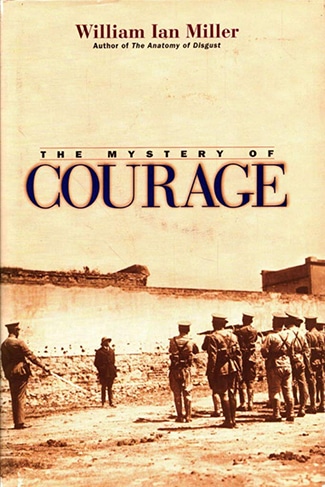
Here to help us explore the fascinating complications of courage is William Ian Miller, a historian, professor of law, and the author of The Mystery of Courage. Today on the show, Bill explains how centuries of philosophers, soldiers, and storytellers have approached courage and the hard-to-answer questions its manifestations raise. We discuss why courage has long been ranked among the highest virtues, the relationship between fear and courage, the fuzzy line between courage and cowardice, the association of courage and manhood, whether or not courage is domain specific, the difference between offensive and defensive courage, whether martyrs are courageous, whether deeds with evil ends are courageous, how fear, shame, and honor shape brave action, and more.
Resources Related to the Podcast
- The Road to Richmond: The Civil War Memoirs of Maj. Abner R. Small
- If I Die in a Combat Zone: Box Me Up and Ship Me Home by Tim O’Brien
- Good-Bye to All That by Robert Graves
- The Personal Memoirs of Ulysses S. Grant
- AoM Article: Developing Manly Courage
- AoM Article: 9 Ways to Become More Courageous
- AoM Article: Courage Vs. Boldness — How to Live With Spartan Bravery
- AoM Podcast #380: How to Increase Your Courage and Bravery
- AoM Article: The 54 Best Quotes on Courage
- AoM Article: The Cardinal Virtues — Courage
- AoM Podcast #763: The Perils and Powers of Cowardice
- AoM series on honor
Connect With William Ian Miller
Version 1.0.0
Thanks to This Week’s Podcast Sponsor
Incogni. Take your personal data back with Incogni! Use code MANLINESS at the link below and get 60% off an annual plan: https://incogni.com/
Listen to the Podcast! (And don’t forget to leave us a review!)





Listen to the episode on a separate page
Subscribe to the podcast in the media player of your choice
Transcript
Brett McKay:
Brett McKay here and welcome to another edition of the AoM podcast. Courage is one of our most prized and celebrated virtues, but once you really start exploring it, the nature of courage is surprisingly hard to pin down. Here to help us explore the fascinating complications of courage is William Ian Miller, a historian, professor of law, and the author of The Mystery of Courage. Today on the show Bill explains how centuries of philosophers, soldiers, and storytellers have approached courage and the hard to answer questions its manifestations raise. We discussed why courage has long been ranked among the highest virtues, the relationship between fear and courage, the fuzzy line between courage and cowardice, the association of courage and manhood, whether or not courage is domain specific, the difference between offensive and defensive courage, whether martyrs are courageous, whether deeds with evil ends are courageous, how fear, shame, and honor shape brave action and more After the show is over, check out our show notes at AoM.is/courage. All right, William Ian Miller, welcome to the show.
William Ian Miller:
Thank you. Happy to be here.
Brett McKay:
So you wrote a book 26 years ago called The Mystery of Courage, where you explore the moral psychology and sociology of the virtue of courage. I’m curious what led you to take a deep dive into this virtue?
William Ian Miller:
My field is the Viking sagas, the Icelandic family sagas, and there the issue of courage and cowardice is always front and center on display. The characters are anxious about it, and I just thought it was one step from there to just think about it generally seeing as it’s still very much with us. It’s an anxiety. I think every little kid grows up wondering if they have what it takes or don’t have what it takes, and mostly trying to figure out what it means to be a person of courage if you’re even reasonably tested anymore. But so I just thought this would be an interesting thing to look into since there’s no shortage of sources because courage and cowardice are the two kind of standard themes of world literature from time immemorial.
Brett McKay:
Yeah, and it’s not just fiction or epics or things like that. Philosophers have spent a lot of time on courage.
William Ian Miller:
It has been an obsessive topic, not just among fighters and anxious kind of males, but it has been a constant theme among philosophers because it’s very hard to get a fix on once you start to think about what is it and do I require certain mental states? What mental state is the driver of courage? Can we figure it out? And if you ask the people who we look at and say, now that’s a real courageous person, what do they think? And they often don’t think about it at all. They just say, I did what I had to do, or they said I was scared out of my wits the entire time. I don’t understand why I’m being called courageous.
Brett McKay:
So like I said, the title of your book is The Mystery of Courage, and you got that from a phrase written by a civil war soldier named Abner Small who pondered the mystery of bravery.
William Ian Miller:
Bravery, right. One of the real blessings of researching this book was reading hundreds of war memoirs. Some of them are just literary masterpieces, and these are people who would not have stuck a pen to paper, but for trying to puzzle through their own performance during their war service. If I could recommend to whoever your listeners are, to get a book called The Road to Richmond, it’s the title of this Abner Small’s memoir. He was a union officer at Fredericksburg in Antietam, and he turns out to be a brilliant writer and never would’ve written anything but for trying to come to terms with his war experience. So it comes from him and it’s just a powerful moving memoir.
Brett McKay:
And what he does and what you do in this book, these men who are writing about their performance and battle, they’re grappling with, well, am I courageous? And then when you think about it, as you said, we think we know what courage is, but when you start thinking about it, you really have to be like, wait a minute. Well, I felt scared, but I did it anyways. Is that courageous or I didn’t feel scared and I was able to do the thing? I mean, yeah.
William Ian Miller:
Are you supposed to feel the fear and then overcome it? Or are you supposed to get rid of the fear and not feel it at all? And nobody thinks, if you think of a person who does objectively what would’ve been a dangerous thing and succeeds at it, but had no clue, was too stupid to know that there was anything dangerous about it, we don’t think they’re courageous. They didn’t have any temptation to flee. They weren’t under any stress because they were too stupid to discern the risk. We don’t want to give it to just the stupid person who just kind of luckily does the right thing so that you want some idea that you are in the zone of danger, right? There’s no way that courage doesn’t have a complicated walls or dance with fear. But how, I mean, is fear supposed to sit on the sidelines or are you supposed to just do a little kind of chacha with it? Or what are you supposed to do? How’s the fear supposed to be managed?
Brett McKay:
You also begin the book with this example that showcases how, once you think about courage, it’s like, what is this exactly? And the example is this. It’s the description of a good coward. What can the good coward tell us about the mystery of courage?
William Ian Miller:
Yeah. Here is this, when you start reading these memoirs, you just run into these wonderful storytellers. Here is a guy writing about his civil war experience about 30 years after the fact, and he describes a man in his unit whom he calls the good coward. He didn’t think he was a good coward when he was in the war with this guy. He thought of him as just a plain old coward. But now in reflecting on him 30 years later, he thinks that he might’ve been, in fact the most courageous of all. Here’s what he did. He lines up for every battle. And once the bullets start flying and the guy next to him takes a hit, he turns and runs, he’s ashamed, he comes back to camp, maybe a day or two later is miserable. He does all the grunt work for everyone. He’s trying to make amends for every run, and then the next battle, he runs away again.
But every time he lines up, takes his steps forward until the guy next to him gets crunched. He manages to steal himself to do it the next time. So the guy who wrote this up, a guy named Robert Burette says, now that I think about it, he might’ve been the most courageous of us. All us young guys, we were just all hell bent for leather. We never thought about it at all. This guy had to overcome the most monstrous demons to line up each time and think he was going to do it this time. And yet he showed up again, suffered all the crap that his mates gave him. It turned out though that a lot of the mates just understood him that he was making a good effort and were kind to him. There’s a sense that the author was not kind to him and is now making amends by writing this memoir 30 years later.
Brett McKay:
So the guy had the courage to keep trying and trying and trying again.
William Ian Miller:
He kept trying. So like Tim O’Brien, many of your listeners will have read some of Tim O’Brien’s work, Vietnam War vet. He wrote a memoir when he’s just 23 years old, called If I Die in a Combat Zone. And the whole book is a desperate attempt to figure out what courage is and whether he managed okay, and to come up with a theory that would describe to make it possible for him to have delivered at least reasonably well. What he describes, he comes up with a theory. He was terrorized the whole time. He would just feel his stomach caved in. He would just feel sick with nausea, panic, terror. And he said, I just knew I didn’t deliver then, but I promised I would do better the next time. And so what he comes up with a theory is of averaging your performances over time.
Some days you’ll have it, some days you won’t. And in the great epics like the Homeric epics and stuff like that, battles never lasted even one day. They lasted an hour or so before one side turned and ran. So the efforts that you had to muster up were every spring to get it together once or twice to deliver. But imagine yourself when the most hellish of all wars, World War I, imagine yourself in a battle that in some places on the Western front lasted four years. You are under constant shelling and sniping for four years. Well, then nobody makes it. Everybody finally runs out of courage. They go crazy.
Brett McKay:
You note that in the earliest discussions of courage from ancient philosophers, it was either placed first among virtues or no lower than third among the four cardinal virtues. Why has courage always been ranked so highly?
William Ian Miller:
I think one is it’s the people who are writing are men. And of course it’s the most anxious concern about little boys growing up and stuff like that. That’s one issue. But the standard one is the explanation that if you don’t have courage, you don’t have the space in which to exercise the gentler virtues like temperance, charity, prudence and stuff like that, it buys you the space where you can cultivate kind of leisure hours and more refined behaviors. You can think of it as the spiny outer shell of love. Can you imagine saying you love somebody and you won’t go into a burning house to try and get ’em out? What does love mean without a certain amount of courage?
Brett McKay:
So courage protects love. Courage makes civilization in all the civilized virtues possible, and it creates the security where we can even think about the sort of softer pursuits of life. Yeah. Something you talk about in the book when trying to suss out the definition of courage is that sometimes philosophers or people writing war memoirs or politicians or whatever, there seems to be a bit of self-interest in how they define courage.
William Ian Miller:
You better believe it. Yeah.
Brett McKay:
Tell us about that.
William Ian Miller:
You cannot believe how, I mean, there’s just the politics of courage. Who gets to define it? So who qualifies? Well, in the old regime, of course, women couldn’t even, it was all the words for courage were the word for man. For men, even in Hebrew, the word for man is the word for courage. But it was only allowed to upperclass men too, and not to slaves or to workers or to lower class men. So you have definitions that are always kind of, let’s say favoring one group as against another. And so people fight over what is courage to get themselves to qualify. I mean, there’s a big debate right from the start, although the philosopher Nietzsche made it into a big deal. But it’s right there from the very start. And the first writing’s about courage is whether the most proper courage is displayed on offense that is in the charge, or whether it’s displayed on defense that is taken it taken crap and not running. And as we moved into modern warfare where battles lasted months, taking it and … became more the defining way of describing courage. But it’s funny, the battle of offense versus defenses constantly being still fought over. But now we end up in our country with the silliness of people thinking that if you invest in a Silicon Valley startup, you’re showing courage. I mean, but that’s a move. Everybody’s trying to claim it for their own behaviors, and some of them are just downright laughable.
Brett McKay:
Yeah, there’s a lot to unpack there. So there’s often been a class divide with courage. So you have the upper class guys who are these lower class guys. They’re just brutes, they’re thugs, and it’s just the mean streets that made them tough. But that’s not the same thing as courage. And then you got the lower class guys who are like, look at these a affect rich guys. These officer guys think so highly of themselves, but they’re actually really soft and they’re going to be cowards when the stuff actually hits the fan. And you just generally have different types of men each claiming that courage belongs to people who are like them. And we might popularly think of courage as belonging to a certain type. But the interesting thing you see in war histories is that you couldn’t always tell from the type who was going to be courageous.
William Ian Miller:
Yeah, yeah. Do you know what? My dad was in heavy combat in World War II, saw a lot of action in the Pacific. He was the most, let’s say, non-martial human being on the planet. He was not into sports. He was just a sweet, decent man. And it turned out he was a good soldier. He turned into a creditable soldier. He got two bronze stars for certain rescue missions. He went on. It’s funny, one of the things that as a frequent theme in a lot of the Civil War memoirs and in the World War I memoirs, is that there was no predicting from social background or employment who would actually be the good soldiers. And sometimes it was the accountant and not the barroom brawler. And in fact, the letters home from soldiers always love to note any, anytime one of these street thugs or barroom brawler types, coward and ran, they probably coward and ran no more than anybody else did. But the other soldiers like to note that when they did. But one of the things that the unit commanders constantly refer to is how surprised they are at who delivers and who doesn’t. That there’s no kind of predicting or because of people have good days and bad days of counting on a person who basically is pretty good delivering all the time or counting on a person who’s pretty not good, not delivering sometimes.
Brett McKay:
I mean, in this idea of offensive versus defensive courage, you make the point that as warfare changed from ancient warfare where like you said, a battle might last maybe an hour. You did the charge. It was kind of a shoving match, and so you needed that offensive courage. But then as war changed to mechanize warfare and you had to just trench in and just endure, we started valorizing the courage of defense, of endurance, of endurance. But I still think we still valorize. We still hold in high regard that offensive courage.
William Ian Miller:
Yes, we do. I would recommend people to read Tim O’Brien’s little memoir If I Die in a Combat Zone, he says, the charge. The charge. That’s the thing that’s pure courage. But then he just day in and day out, he’s just starting to think it can’t be just that. But it still holds this kind of emblem for us of, I think ultimately the real kind of just basic original conception of courage is you facing off against another guy whose eyes you can look into. Modern warfare, you never see the eyes of your enemy except in the rarest circumstances. And usually only when they’re prisoners, the eyes who are watching you and judging you in modern warfare are your mates eyes. And it’s different to when you’re matching up courage against something else.
Brett McKay:
You talk about how Aristotle, when he was trying to figure out what courage is, he thought that courage requires higher reasoning and practical wisdom. So here’s another example of kind of hoity-toity philosopher guy, maybe using a little bit of self-interest to define courage. You’re suspicious of that rendering of courage or seem to be suspicious of that rendering of courage.
William Ian Miller:
Well, I’m suspicious because the philosophers are always making, unless you bring reason to the fray and know exactly when you should expend your courage only for valued goals and get it the cost benefit analysis. Exactly right. You’re just being, oh, either an insensate dumbbell, like a kelt in Aristotle’s view or a ferocious lion who just is just all fury. They want to bring reason in certain kinds of, let’s say, mental refinements into the arena. And I am always suspicious of that. And Tim O’Brien, again, as another wonderful example, there’s a dying marine out in the mud and somebody hollers for a medic. And in heavy firefighting, this medic runs out and ministers to this dying marine holding up a plasma bag, an ideal target. So when he comes back, O’Brien says, a manifest action of courage and actually a useless action because the poor guy was dead anyway or going to die and just a noble act, but also just doing his duty. And the medic just says, well, I don’t know, somebody called a medic. And I just guess I ran. So Tim O’Brien is kind of upset with the lack of intellectualizing of the demand made on this medic.
Brett McKay:
Like you said, you researched and wrote about the Icelandic sagas. I don’t imagine those vikings really intellectualizing courage all that much.
William Ian Miller:
Well, there’s standard interesting little discussions about when you pick your moments to fight and when you eat crap and just sit back and wait, and they have a saying that says only the slave avenges himself immediately, but the coward never does. What that saying is meant to do is saying, you do not waste the opportunity to have the ball in your court to make the next move to take revenge. You don’t waste it by hitting back right away. You make the other side stew, wondering when you’re going to hit back, but eventually you have to hit back or you become a coward. And that world forgiveness is very hard to make into a virtue because it looks so much like cowardice, but managing your time between when you take the crap and then when you avenge it is your time to make the other side a nervous wreck. And so there’s all these kind of complicated, they talk about it. They talk about don’t be a hothead, don’t eat that one. And they have a kind of a standard rule that if you avenge every offense, you have a very short life. Sometimes you just shrug your shoulders and say it’s not worth responding to.
Brett McKay:
So it sounds like the Vikings did have a bit of Aristotelian practical wisdom.
William Ian Miller:
They had a ton, I think much more than the philosophers nowadays do because they lived in that world. They truly bore the risks, and they’re very smart about it. It’s very interesting in those societies as to what constitutes fair play. Are you supposed to give your opponent a fair chance? Notice in Hamlet, our probably most famous revenge story, Hamlet comes up behind Claudius and he’s praying, and Claudius doesn’t know Hamlet’s behind him with his knife pulled to stab him in the back. But Hamlet hears, he’s praying and thought, oh no, if I kill him now his soul goes to heaven. Hamlet wants to make sure his uncle goes to hell, but he shows no, not even the least bit of moral problem in stabbing him in the back. So the point is, you take your revenge, you don’t have to offer fair odds.
Brett McKay:
This reminds me of this idea of fairness. It reminds me of, I think of Odysseus and Achilles. So sometimes Odysseus gets kind of portrayed as the not courageous guy, wily and sneaky, but he did some courageous things.
William Ian Miller:
Oh, he sure did. He sure did. But there’s constant battle about whether you can win by trickery or whether you’re supposed to just win by macho kind of your force against air force. But Monte the Grace French essayist rights, nobody says we can’t take advantage of our enemy’s stupidity just as well as our enemy’s physical weakness. And since 90% of warfare is about trying to fool the other side as to what your alignments are, how many troops you have, which units they are, and so on and so forth. So trickery is just part of the game too.
Brett McKay:
Oftentimes when we think about, okay, is this person courageous? We typically talk about, well, if you’re courageous, you’ll be courageous across all domains.
William Ian Miller:
And that’s just not true.
Brett McKay:
It’s not true. Yeah, I’ve seen that in my own life. Not true in my own life. There’s certain domains where I feel like I’m pretty courageous, but then there are other ones where I’m not.
William Ian Miller:
And I grew up in Green Bay, Wisconsin, and I went to a working class high school, and there are the tough guys, and then there are the little weenies like me and the tough guys turned out to be remarkably generous and letting me alone because there was one or two domains in which I showed less fear than they did. And it was in drag racing for some strange reason. So I was willing to crash a car and die before they were. And so they cut me slack in other domains, not very, where I was just a downright coward, like in barroom brawls or something like that. And they were actually kind of generous in their attributions. And you know what? It’s interesting, in the war memoirs, there’s some people who are totally courageous and cool under artillery bombardment as opposed to some who just completely collapse in terror under bombardment.
Then there’s some who can’t take rifle fire and some people who are completely relaxed under rifle fire, but no one is cool under every way of dying, under every weapon. And there were these studies to try and map on with soldiers’ understanding of the dangerousness of a weapon. That is how really lethal it was. And it’s frightening. And you would think that the frightening this and dangerousness should map on, but it doesn’t. So like stupid dive bombers scared the crap out of people, and they were very lethal. It was just the noise they made that terrorized everybody. But there are people who just preferred rifle fire to artillery fire and people who could handle artillery fire but couldn’t handle rifle fire. And it’s just like for each weapon or for each kind of demand made on you needed a courage of its own sort to deal with it. So there wasn’t one kind of, unless you were a crazy person, there wasn’t one kind of seamless virtue that could handle it all.
Brett McKay:
Yeah. So Montaigne said, A man who’s truly brave will always be brave in all occasions, and that’s wrong. I think Montaigne is wrong there. Yeah, there’s some examples where you see this. I remember reading about a boxer, I forget who it was. It was a professional boxer, and in a lot of ways he was a really tough guy, tough demeanor, a real bruiser, and he could get into a ring with another guy who could possibly kill him. So he’s courageous in that way. But when a handyman or service people came to his house to fix stuff, he was actually terrified to talk to them. So boxing didn’t scare him, but small talk like that did.
William Ian Miller:
Yeah, there’s all kinds of funny stories like that. But look at these Greek heroes. So Achilles and those guys, if they heard a thunderstorm, they were all cowering and shaking. They couldn’t bear thunderstorms. I mean, it was just the terrors are even culture specific as to what will be considered a terrifying thing. But a constant thing that is made in literature is like a warrior who will face nonstop bombardment but can’t get up the nerve to ask a woman out on a date.
Brett McKay:
You think they should be able to do it, but they can’t.
William Ian Miller:
They can’t.
Brett McKay:
What’s interesting about your book, I mean all the examples we’ve been talking about so far have been physical courage or al courage, and your book primarily focuses on physical or al courage. And people today, since we don’t, a lot of people don’t face circumstances where they have to display physical courage.
William Ian Miller:
Right.
Brett McKay:
We talk a lot about moral courage, but is moral courage without physical courage, really courage.
William Ian Miller:
I don’t feel I make a claim in the book. There is a standard moral courage. It’s that kind of standup and meeting type of courage to take an express, a decent kind of a moral unpopular view to risk being mocked and laughed at, sneered at, howled at, to state what most people will recognize is an honorable, decent view. But can you imagine if that person could be backed off from stating that view? If somebody just shot him a look and said after the meeting, man, you’re going to deal with me. And then he sat down and didn’t say a thing. So moral courage needs a certain amount of not being able to be scared off your ability to make your stand. You still have to be able to back it up. So I’m not sure that there’s a coherent, consistent distinction between moral and physical courage in the writings like US Grant, Ulysses Grant, his wonderful, brilliant memoir he wrote when he was dying, kind of sense that moral courage kind of understanding that without the physical behind it, it’s just not there. There’s another thing that kind of is interesting too. Generals will say that there’s no shortage of courage that they see in their men in battle that in fact its courage seems to be quite common. But then you get into certain domains where it’s rare beyond belief, and those tend to be the moral domains standing up for right in an unjust regime or something like that, incurring risks to your job and your reputation by taking an unpopular but clearly morally right position, who knows?
Brett McKay:
That’s interesting. So it sounds like moral courage doesn’t mean a lot if someone isn’t willing to take on physical risks to back it up. But it also may be harder to exercise moral courage because in some ways it’s easier to face physical danger than the social pressure to conform. Let’s go back, earlier you mentioned something about how courage since the beginning of western civilization, and you see this in other cultures as well, courage has been entwined with manhood. So a lot of the words the ancients used to describe men were the same words for courage. So there was wus, which was Latin for manliness, weir man, that means courage, andrea, that’s Greek. That also is man, also means courage. And then the word in Hebrew for man is the same one for courage. So why the connection between courage and manhood, do you think?
William Ian Miller:
It is the ultimate, it’s the image of the male as a dominator, as protector as the ruler in many cases, although in small communities, it was the job of the men to do the fighting and the women were to manage the home. So part of it is constructing an entire ideology of training men up to be tougher than they were likely to be in the interests of the defense of family and the community, an anthropologist who did his field work in New Guinea, among those violent, violent New Guinea tribes, which are something else kind of graph the amount of intensive labor it took to raise up little boys to be violently death seeking that it takes much more social energy and work to raise up a bunch of blood feeders than it does to raise up a bunch of accountants. So it’s not like it’s not labor intensive from a child rearing point of view. And then you might ask yourself, who does the child rearing in the sagas? It’s the women. So the women are the ones who inculcate those manly virtues. I think they might cynically think this is a wonderful way to handle our men. We make them able to protect us, and we make them able to get knocked off.
Brett McKay:
I mean, you even see this with the Spartans, right? So the Spartan mothers were famous for telling their sons, or their husbands either come back on your shield or carrying it.
William Ian Miller:
It’s like, it might be interesting actually, who invents this male ideology? Is it men or is it women? And there’s all kinds of cultures in the North African kind of Berber and Arabic cultures. It’s the women who keep score of how the men are doing and their feuds and fights, and they composed mocking songs of the losers. And in the sagas, the women taunt their men for backing down from a fight or for not taking revenge.
Brett McKay:
You call this women keeping score about how men are doing. In the Kers department, you call it the female gaze. You talk about, we see this female gaze in African cultures and then also with the Icelandic Vikings. But you also saw this in World War I, the women keeping check on the courage of the men. So there were women in World War I, what they would do if they saw some guy who was fighting age and he wasn’t out there in the battlefield, they would get a feather and put it on him.
William Ian Miller:
They would go around the streets of London handing any male they saw in civilian dress who was a warrior age, a white feather. And then of course that was the women were out there shaming the men in the memoirs among the many, some of the guys who are just home on leave and badly wounded will get white feathers. I mean, that’s when the women are making a mistake, right?
Brett McKay:
Yeah. So this is interesting. So this idea of men valorizing courage, your interesting point here or interesting argument is that maybe the women are the ones who inculcated this culture of courage.
William Ian Miller:
Certainly it wasn’t a case where the women are setting back and saying, oh, the men and their crazy views of courage, the women were the ones who are inculcating it into the little kids in many of these cultures and who are wholeheartedly behind it.
Brett McKay:
And I think it’s interesting, this whole idea of courage being entwined with masculinity or manhood. I think a lot of us in the 21st century might think, oh, we’re over that. We’re more enlightened. But I still think there’s a vestige of it in men today. I mean, I think if you call a guy a coward or a chicken, they’re going to be like, oh, wait a minute here, we got to step outside. We’re going to take care of this.
William Ian Miller:
It’s still the worst insults I and just think of how much growing up as a little boy, the day-to-day just playing, were often courage contests who could jump off the highest wall or the roof or who could go steal strawberries from Mrs. Jones? I mean, they’re all tests of undertaking risk. And once you showed yourself able to do that, you only bought yourself a little bit of space for that day. You weren’t a weenie. But then the next day there’d be some little test like a boxing match or a wrestling match or something like that
Brett McKay:
With masculinity or manhood.
William Ian Miller:
One law student said that the horrors of men, the anxiety of men in the sex act where men have, if they fail, it’s obvious to the woman. So maybe that is the deepest core anxiety. I am saying this tongue in cheek, but it’s certainly one of the core anxieties about manhood.
Brett McKay:
Something that’s interesting to observe with the genderedness of courage is that even though courage has traditionally been associated with masculinity, women can be courageous too. And something you talk about is that women have historically been associated with the defensive side of courage. So taking pain, taking the pain of childbirth, enduring hardship. People have often said that women are actually better than men at defensiveness courage, but it’s still not typically part of a woman’s self-identity. For a man being called a coward is one of the worst insults. But if you call a woman a chicken, they’re probably not going to be that offended or want to fight you over. That’s
William Ian Miller:
Right. That’s right.
Brett McKay:
So I think we’ve explored some of the cultural ideas around courage and it’s muddled and it’s kind of like what’s going on there? But let’s return to something we were talking about at the very beginning of our conversation and get more into the psychology of courage and its relationship to fear. Do you think courage requires an internally courageous stance, or can you be courageous while being terrified as long as you act courageously?
William Ian Miller:
My view is that you’re lucky if you somehow get rid of the fear and just do what you have to do. But are you going to think that anybody is even, I would think somebody would be more courageous who has just overcome with fear, who still manages in spite of it, to do what needs to be done. One of the things that’s very interesting in a lot of these war memoirs from manifestly brave guys who were decorated, there was no doubt about them delivering under fire. Many of them do not understand why they got the metal. Other than that they just somehow managed to do something. They don’t know how they did it. All they can remember was that they were scared out of their wits. So they think my internal state scared out of my wits was what we think of as the cowardly state that I ended up doing.
The right thing happened by kind of accident. My body was on automatic pilot. We get the reverse and what were common claims in the civil war of a guy failing to go forward because his legs give out weak legs, and Lincoln was famous for pardoning. Those guys who were brought up in court, martialed to be shot for not advancing for cases of weak legs. Where as far as the internal state of the guy going forward, he wants to go forward. He is trying to keep up with the guys, but his legs give out. So his body prevails against his courageous intentions or his dutiful contentions. What do you do then when the body just refuses to go along for the ride? Although your brain and your psyche is gungho for your body to go along for the ride, but it doesn’t. I’ve been on my whole life a motorcyclist.
I’ve ridden bike now. I’m going to be 80 in a couple of weeks, and I’ve had more near death experiences in the last five or six years in the whole life up until then. And it’s not because my reflexes are slower, which they are, it’s because the drivers have gotten worse and they’re all texting. They’re just texting. They’re not paying attention to the road and putting my life at risk. Well, every once in a while you get put in a situation where you’re dead. You’re dead. You can’t believe the situation you’re in and something just takes over. My body took over an automatic pilot and did probably when I got through the mess, the only thing that could have been done to gotten out of it alive, did I know what I was doing? No. My body in exact opposite of weak legs took over when my mind was utterly in a state of terror and blank. So the body still functioned, did the only thing when I got back, when I would come out the other end and burst out in the giggles because I couldn’t believe how close a call it was. I couldn’t believe when I thought about it that I did the only thing that could have been done to escape. So there you get a kind of an anti matter of the weak legs phenomenon.
Brett McKay:
Right, so you were terrified, but your body somehow took over and did the thing that you were supposed to do.
William Ian Miller:
The body took over and did the right thing. That is what the military actually came to think would be gained by the constant drilling, nonstop drill, drill, drill, so that the body would behave automatically when the brain was just cashiered out in a state of terror.
Brett McKay:
And again, that makes you ask yourself, was that courageous if you’re just like an automaton?
William Ian Miller:
Yeah. See, the assumption that most military leaders had is that all armies will eventually turn tail and run. That what’s being contested between two armies is their fund of courage. It’s kind of a moral battle, and one side will cave and one won’t. I’m not sure that’s exactly right, because one of the things that happened in the Civil War was that people started to see that it didn’t, courage just didn’t matter. It’s which side had the biggest guns in the most men that the amount of bravery might have a little nice little point here, but ultimately it was just the sheer amount of material brought to bear. That was the difference. The courage didn’t make the difference in a battle. Now, of course, you could come up with some counter examples, but in a large sense, it’s true.
Brett McKay:
What role does shame and honor play in courage?
William Ian Miller:
Oh, it’s the name of the game, right? Aristotle. And some will say that courageous deeds done because you would beat unwilling to bear the shame of not delivering. Being called a coward, being just mocked is not the perfect courage. It’s like you’re more scared of being shamed in public than you are of getting killed. I just think that’s a total misrepresentation. Every epic hero fails to be courageous. Then by that measure, the shame of being seen a coward is what makes many men deliver. And there’s a funny little saying that I found in the 17th century, more men would be cowardly if they only had courage enough, and it’s the sign of being driven, the fear of being disgraced drives them to go forward in battle when what they want to do is run. It’s complicated. I don’t see how you get courage without the honor base, shame driven aspect to it. I just don’t understand how it’s psychologically possible except for a few very rare, rare people.
Brett McKay:
It also raises the point that courage isn’t just an individual virtue. It really is a social virtue. You have to have an audience or an imagined audience to really think about, well, I’m going to be courageous. I mean, it’s hard to be courageous when you’re by yourself.
William Ian Miller:
Yes, you better believe it. I think the one true test of whether you are courageous is whether you would go through the action when you are safely not seen. You could actually walk back and nobody would think that you shirked a duty. You would be home free. So you’re totally alone with no eyes watching you of your own side. And will you still do the thing you’re supposed to do? If you do it, then that is pure, pure courage. Lonely courage.
Brett McKay:
Yeah. I mean, if I look at my life when I’ve encountered having to muster up courage to do something, particularly when I was a kid, I remember I was with a bunch of boy scouts and we were doing cliff dives off some really high cliffs and I couldn’t do it, but everyone else was. I was terrified. And the thing that finally got me to do it was I just was thinking, I can’t leave this place and be the only guy that didn’t jump off that cliff. I wanted to avoid shame and I want an honor. But for me, it was great. I actually did this thing and I felt really great afterwards. And then after I did it, I was able to just jump off this cliff over and over again. I wasn’t scared anymore.
William Ian Miller:
Of course, the shame motivated you to do it. I don’t understand how most of us even do remotely courageous things unless we’re too ashamed not to.
Brett McKay:
Yeah, it’s the fear of cowardice,
William Ian Miller:
The fear of cowardice or the fear of being seen now. That’s why the eyes, will you ever blame yourself if alone for your failure? Well, you will, but we’re never as hard on ourselves as mocking others will be hard on us.
Brett McKay:
Is there a tipping point where shame driven or a fear of cowardice driven courage is no longer virtuous courage?
William Ian Miller:
Well, I deal with this in a chapter talking about the Japanese performance in World War ii, where death before dishonor, which is a rare achievement for which medals are awarded in the West, was just the norm in Japan. I mean, whole, entire 40,000 men contingents on the island, Saipan refused to be taken prisoner and all got killed. Compliance in the west of those kinds of things, just impossible. You don’t see it. So is it that courage, that death before dishonor become too easy for them? You wonder the cultural pressure to conform the cultural shaming culture so powerful that everybody suicide. Is it a virtue then? Oh God, imagine the peer pressure in the Japanese culture doesn’t mean they didn’t make great soldiers. Man. Oh man, did they make great soldiers? But you wonder if the virtue, it didn’t become too easy for them. The problem, a very difficult problem when you see discussions of suicide, people will say, oh, this was cowardly. Whereas people who say that I think are wondering whether they would’ve the nerve to do it,
Brett McKay:
That reminds me of Bill Maher, the talk show host. He got into a lot of hot water right after 9/11 when he said it took courage for the terrorists to fly a plane into a building. And I remember I heard then I was thinking about, well, yeah, I couldn’t do that.
William Ian Miller:
Well, I couldn’t do it. But if you thought you were going to heaven, if you actually firmly believe thought you were going to heaven. So I always wonder whether the courage of let’s say a suicide bomber is indeed same with the early Christian martyrs. If you think that you’re guaranteed and really believe it without any doubt, although I wonder if martyrdom isn’t because you do doubt and you want to prove that you’re punishing yourself for doubting. But if you really don’t doubt, then you’re just doing the rational thing in your rating of values and payouts. I don’t know. Again, these are wonderfully complicated topics for which there are no easy answers.
Brett McKay:
And another question that arises with the terrorist example, and the reason people were so upset about Bill Maher’s comments is that we typically think of courage as having courage for a morally good cause, and that’s what we valorize. But does the cause need to be good for courage to be real? Or is courage a morally neutral virtue?
William Ian Miller:
No, it is one of the problems that people have according their enemies courage. I mean, take the case of the monstrously evil Nazi regime. There is no doubt that many of those soldiers were utterly courageous and very good soldiers. So you’re unfortunately with courage, you have to admit that it can be employed for good or bad purposes.
Brett McKay:
I think we mentioned this earlier, but this idea that I thought was really interesting, this idea that courage is finite, that you only have so much of it. You talk about in this book, I think there’s been people who studied this in the military where they sort of observed it, is that soldiers, right, fresh on the battlefield, they weren’t that great. But if they’re there for a little bit, then that’s where you see the most courage displayed. And then if you’re there for a few months, you’re pretty much useless and need to get off the battlefield and go back to the camp.
William Ian Miller:
The amazing thing is they did Robert Graves in his wonderful World War memoir, Goodbye to All That, puts it at, he says, roughly at about the six month level, a soldier is totally worthless. And especially the young lieutenants and officers, they’re totally worthless. They’re at their best after about three weeks of getting their feet wet and then for about six more weeks, and then they just start going downhill fast. The US sent in people after the troops in the Normandy invasion and actually did testings and interviews with soldiers, and they found that the useful life of a soldier and intensive combat was at most about 30 days before deterioration set in. And then at about 60 days, they just became what they called, they had the 2000-year stare that is, they just became zombied. So you had under incessant combat, courage levels were just six months is about it that some cases, if they’re pulled out of lines and given rest, soldiers could make it maybe 10 months. And that was about it. So starting in the Great War, World War I, people started to talk about having fixed funds, a fixed amount of courage, and you try not to draw on your account too often because it’ll just be run down to bankruptcy and then you end up in a vegetative state and basically post-traumatic stress disorder or what they called shell shock back then.
Brett McKay:
I mean, here’s another thing that muddles the moral calculus of courage, and you talk about this in the book. It’s the factors of intelligence, expertise, and experience.
William Ian Miller:
It’s just like who’s tougher? Who’s the person who has more courage? The guy who’s an actual trained swordsman, who’s an Olympic gold medalist and saber or the clown against him who’s never picked up a sword in his life and still fights him. I mean, who’s more courage? The guy with skill. His courage isn’t even brought into play. I suppose it was brought into play during the period when he was learning how to be a good fencer, but skilled people get their courage devalued. Think about the people who do bomb defanging bombs. Obviously they are trained to do it, but the risk level is so high that just the fly landing on their finger or something like that, it could detonate the charge. I don’t know. Certain kinds of expertise will devalue the courage that it takes, but certain ones, it just seems to take a lot of guts no matter when and how trained you are at it.
Brett McKay:
And in terms of the example of the bomb diffuser, the skill of being able to do that allowed them to display more courage. You had to be skilled to diffuse the bomb so you could display that courage to actually diffuse the bomb. But I think other philosophers had talked about this intersection between skill and expertise and courage. I think it was Monta. He talked about people who are skilled swordsmen require less courage than the unskilled. You have that expertise, so you know can win.
William Ian Miller:
Well, yeah, Montaigne goes with that. He just says that in fact, in duals, you get this crazy behavior of the French aristocratic class where the side who gets the choice of weapons will pick a weapon that he knows he’s not as good with as the other guy, just to prove that he’s more courageous. In other words, handicapping himself purposely so that he’s testing his courage rather than his swordsmanship. And then the thing about intelligence is how do we measure kind of intelligence? One of the ways is that smart people are able to discern risk. They’re mathematically more astute. They will discern odds and risk at quicker and more accurate levels than dumber people. And that will tend to make them more risk averse in situations in which a dumb person doesn’t see any risk. So the smart person looks like the coward, and of course, in fact, they often are because they’re seeing too much risk in a world.
Brett McKay:
Again, it’s hard to figure out who’s being courageous here again and again is that mystery of courage.
William Ian Miller:
Yeah, yeah, yeah.
Brett McKay:
So I’m curious, after spending years thinking about this book and working on it, what do you want someone to do with the unsettledness of courage that this book explores?
William Ian Miller:
Be more modest about how we ascribe it and when we do and when we don’t. But also I think kind of aspirationally it’s good to want to be courageous and it’s good to try and do those things which you can without cheating and without great inflation. Cause think that other people, maybe you are not the best person to make the call, will say Nice, good work.
Brett McKay:
One thing you argue in the book is that the modern middle class life rarely demands real courage from us. The type of courage we’ve been talking about, this sort of physical courage of being like, I might die. So we’ve kind of trivialized the word, we call it courageous to stick to a diet or start a business or maybe reveal an embarrassing secret about ourselves.We do things like bungee jumping or skydiving to practice courage. So it’s sort of like simulations of courage, the ancient courage. Do you think something’s been lost when a civilization stops regularly asking its members to be genuinely brave?
William Ian Miller:
Yeah, something’s lost. Sure. We end up with the hedonistic kind of culture. We have something definitely is what, it’s funny because Adam Smith, like the guru of modern capitalism, was very, very nervous about the fact that wealth would make the people indolent. They would no longer be courageous. They would just be kind of gluttons and pleasure seekers. And so he joined a militia and drilled every week and marched. Of course, he never saw any combat, but he just felt that you had to prepare because even that prompted a kind of discipline. But he was very nervous. That wealth that he promoted would in fact have a real moral cost, and the cost would be in courage. There’d be less of it. And so you get all this kind of extreme sports and stuff like that where people are desperate to find situations where they can increase the risk levels in their life, but still pretty safe risk levels. There’s not somebody sitting behind a loophole shooting at you.
Brett McKay:
Right. Maybe one of the mysteries of courage is what happens to a society when people don’t have to exercise much courage anymore, and whether we can still train up those capacities somehow in the absence of immediate threat. Well, Bill, this has been a great conversation. We covered a lot of ground here. This has been really interesting.
William Ian Miller:
Very good questions. You were very prepared. Thank you very much for having me, and thank you for doing such a professional job with this.
Brett McKay:
Thanks so much, Bill. It’s been a pleasure.
William Ian Miller:
Yeah, thank you.
Brett McKay:
My guest today is William Ian Miller. He’s the author of the book, The Mystery of Courage. Well, that wraps up another edition of the AoM podcast. As always, thank you for the continued support and until next time, this is Brett McKay reminding you to not only listen to the podcast, but to put what you’ve heard into action.
